When we notice small bumps on our face, our first instinct is often to assume they’re pimples — a temporary breakout caused by oil and clogged pores. However, not every facial bump is acne. In fact, many harmless yet persistent lumps can appear on the skin for entirely different reasons, ranging from trapped keratin to overactive oil glands.

Understanding the type of bump you’re dealing with is essential for proper treatment — and, most importantly, for avoiding unnecessary irritation or scarring from self-extraction attempts. At MEOD Beauty & Aesthetics, we frequently see clients who have tried to “pop” these bumps at home, only to cause more inflammation, marks, or even infection.
In this guide, we’ll explore some of the most common non-acne bumps found on the face — including milia, sebaceous hyperplasia, syringomas, skin tags, and moles — why they form, how to identify them, and the safe, professional treatments available to remove them.
1. Milia (Milia Seeds)
What They Are
Milia are tiny, firm, white or yellowish bumps that often appear around the eyes, nose, or cheeks. They’re sometimes called “milia seeds” due to their resemblance to small grains trapped under the skin. Unlike pimples, milia are not caused by bacteria or inflammation — they’re actually small cysts formed from trapped keratin (a natural skin protein) just beneath the surface.
Why They Form
Milia can develop for various reasons, including dead skin buildup, improper exfoliation, long-term use of heavy skincare or makeup, or sun damage that thickens the outer layer of the skin. They’re also common after skin trauma, burns, or aesthetic treatments that cause the epidermis to regenerate rapidly.
How to Identify Milia
- Tiny, dome-shaped white or yellow bumps (1–2 mm in size).
- Smooth and hard to the touch.
- Do not have a visible “head” like acne.
- Not painful or inflamed.
2. Sebaceous Hyperplasia
What It Is
Sebaceous hyperplasia refers to the benign enlargement of sebaceous (oil) glands beneath the skin, often seen in adults with oily or ageing skin. These appear as small, flesh-coloured or yellowish bumps, sometimes with a central indentation.
Why It Forms
This condition occurs when oil glands become overactive and the surrounding skin structure changes — often due to ageing, hormonal changes, or excessive sun exposure. It is more common in individuals with chronically oily skin or those who have used certain topical steroids for long periods.
How to Identify Sebaceous Hyperplasia
- Small, soft bumps, usually 2–4 mm in size.
- Flesh-toned or slightly yellow.
- May have a central dip or crater-like centre.
- Often clustered on the forehead, cheeks, or nose.
3. Syringomas
What They Are
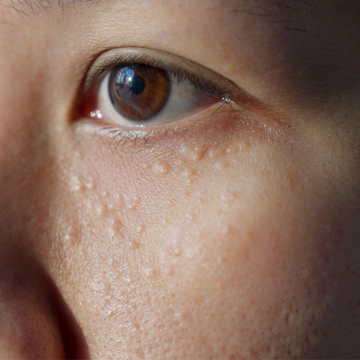
Syringomas are small, benign tumours of the sweat ducts. They typically appear as clusters of tiny, skin-coloured or slightly yellowish bumps, most commonly under the eyes or on the upper cheeks. Though harmless, they can be a cosmetic concern due to their visibility and texture.
Why They Form
Syringomas form when sweat glands become overactive or overgrow. Genetics play a significant role, and they are often seen in women and individuals with Asian skin types. Hormonal changes and chronic irritation around the eyes may also contribute to their development.
How to Identify Syringomas
- Small, firm bumps (1–3 mm), often clustered.
- Typically found under the eyes or upper cheeks.
- Not painful, itchy, or inflamed.
- May increase in number over time.
4. Skin Tags (Acrochordons)
What They Are
Skin tags are small, soft, flesh-coloured growths that hang slightly from the skin’s surface. They are benign and very common, especially in areas where the skin folds or experiences friction — such as the neck, eyelids, or jawline.
Why They Form
Skin tags develop when collagen fibres and blood vessels become trapped inside thicker parts of the skin. They are often linked to friction, obesity, hormonal changes, or insulin resistance.
How to Identify Skin Tags
- Soft, hanging or stalk-like growths.
- Flesh-toned or slightly darker.
- Painless unless rubbed by clothing or jewellery.
5. Seborrhoeic Keratosis
What It Is
Seborrhoeic keratoses are benign, wart-like growths that appear as brown, black, or light tan lesions. They are common in middle-aged and older adults and are often described as having a “stuck-on” or waxy appearance.
Why It Forms
These growths are related to ageing and cumulative sun exposure, though genetics also play a role. They are non-cancerous and typically harmless but can resemble other skin lesions that warrant medical evaluation.
How to Identify Seborrhoeic Keratosis
- Waxy or rough surface, often raised.
- Range from light tan to dark brown or black.
- Can appear anywhere on the face, scalp, or body.
6. Moles (Benign Nevi)
What They Are
Moles are clusters of pigmented cells (melanocytes) that appear as small, dark spots or raised bumps on the skin. Most moles are harmless and develop during childhood or early adulthood. However, new or changing moles should always be evaluated by a professional.
Why They Form
Genetics and sun exposure play major roles in mole development. Hormonal changes during puberty or pregnancy can also trigger new moles or alter existing ones.
How to Identify Moles
- Flat or raised, smooth or rough.
- Usually brown or black, though colour can vary.
- Uniform in colour and shape (non-cancerous moles are typically symmetrical).
Safe & Effective Treatments at MEOD Beauty & Aesthetics
At MEOD Beauty & Aesthetics, we provide safe, medically informed aesthetic procedures to diagnose and remove common facial lumps and bumps. Our treatments — such as Milia Seed Removal, Skin Tag / Mole Removal (Electrocautery), and MelaClear — are performed with clinical precision using sterilised equipment and advanced Korean aesthetics technology.
Post-removal, our team may recommend restorative treatments like Rejuran Skin Booster or Oxygen Glow Rejuvenation to improve skin texture, encourage healing, and minimise post-procedure pigmentation.
Our priority is not only the removal of unwanted bumps but also ensuring long-term skin clarity and confidence.
Conclusion
Not every bump on your face is a pimple — and attempting to self-diagnose or extract them at home can cause more harm than good. Whether it’s milia, sebaceous hyperplasia, or skin tags, these conditions are best managed with professional expertise.
At MEOD Beauty & Aesthetics, we combine clinical precision with aesthetic artistry to safely treat and remove these common skin concerns, leaving you with smoother, clearer, and healthier-looking skin.
If you’ve noticed small, stubborn bumps that don’t seem to go away, book a consultation with us today. Let our specialists assess your skin and design a treatment plan tailored to your needs — because your skin deserves expert care.